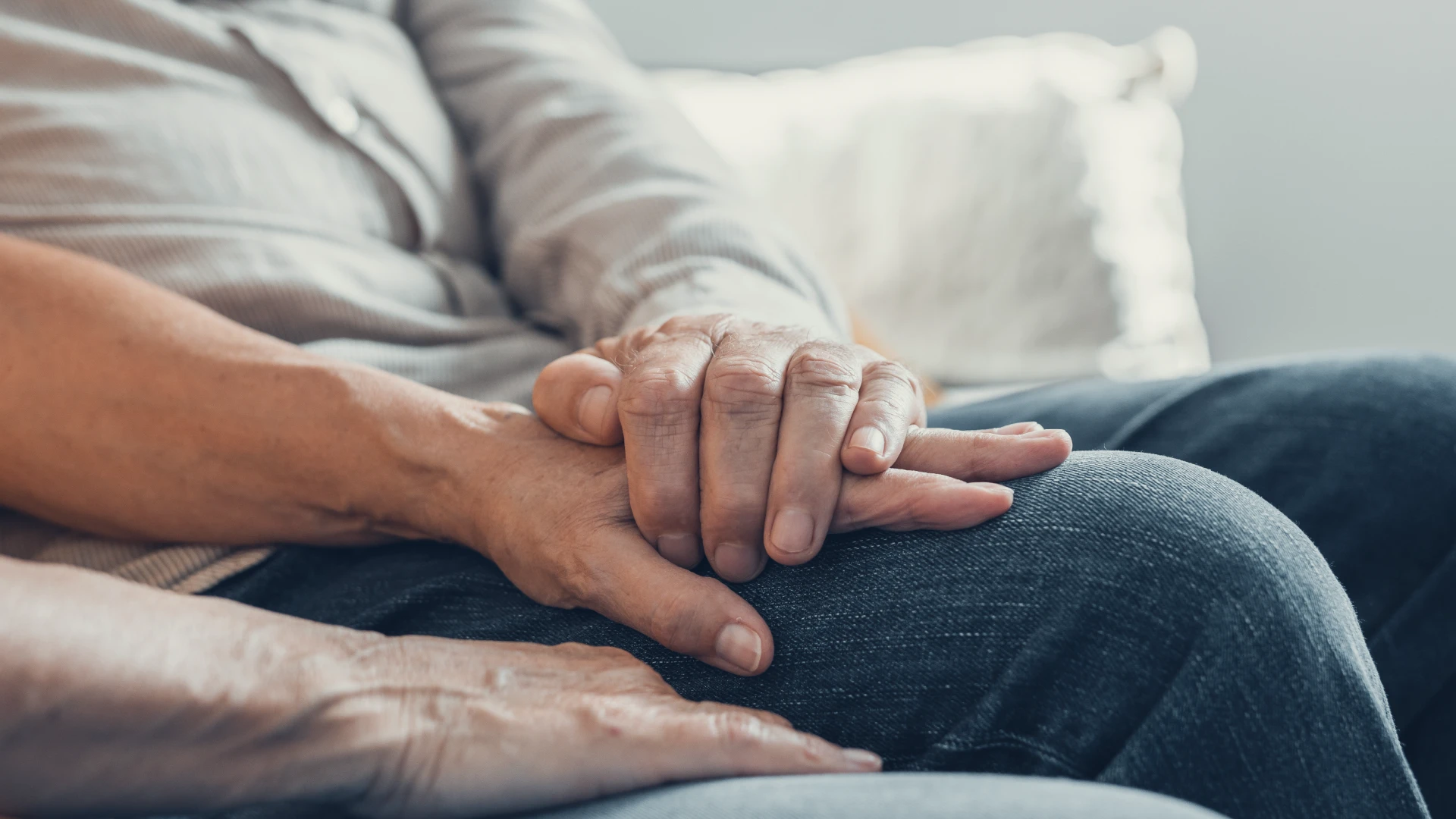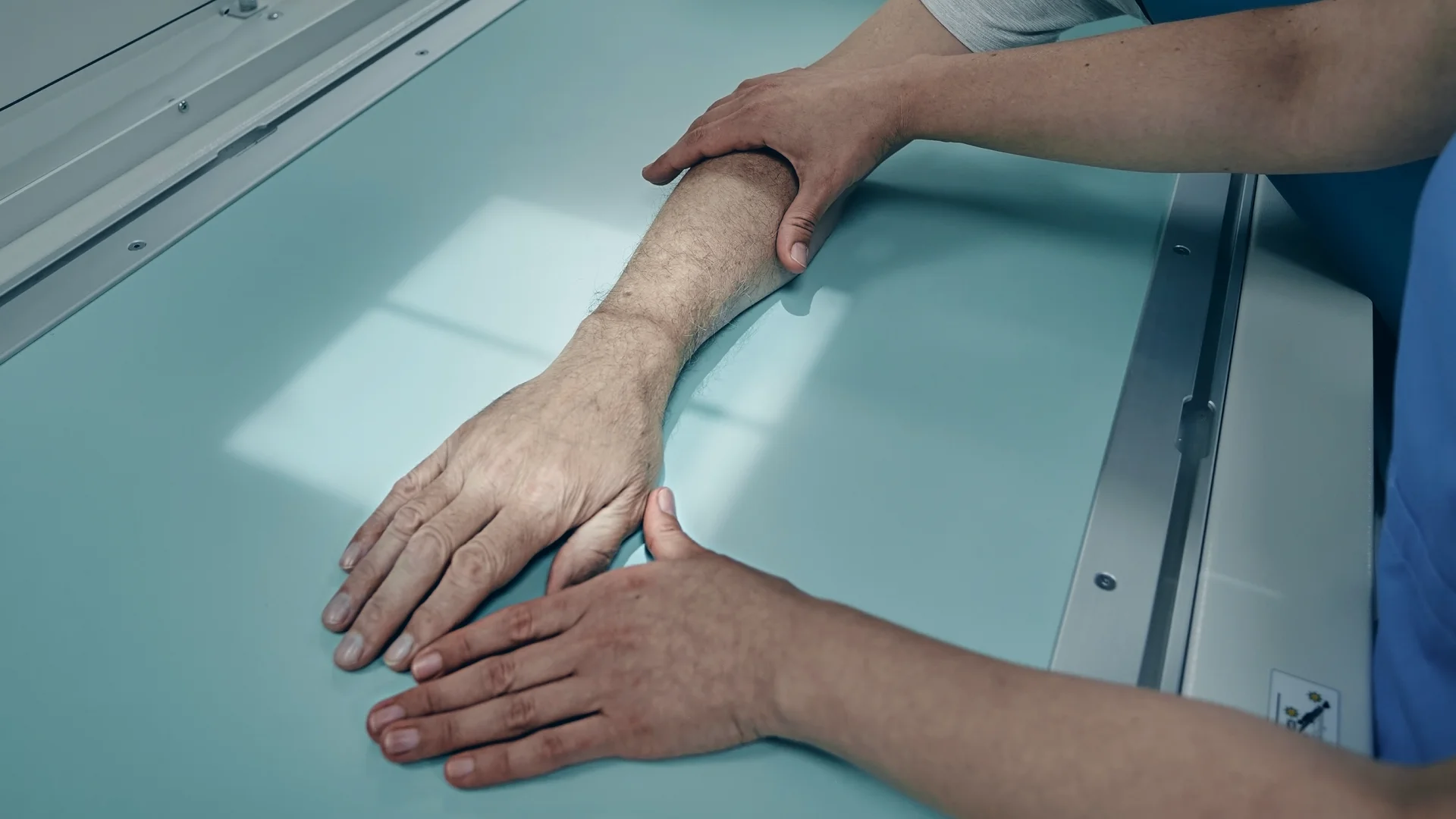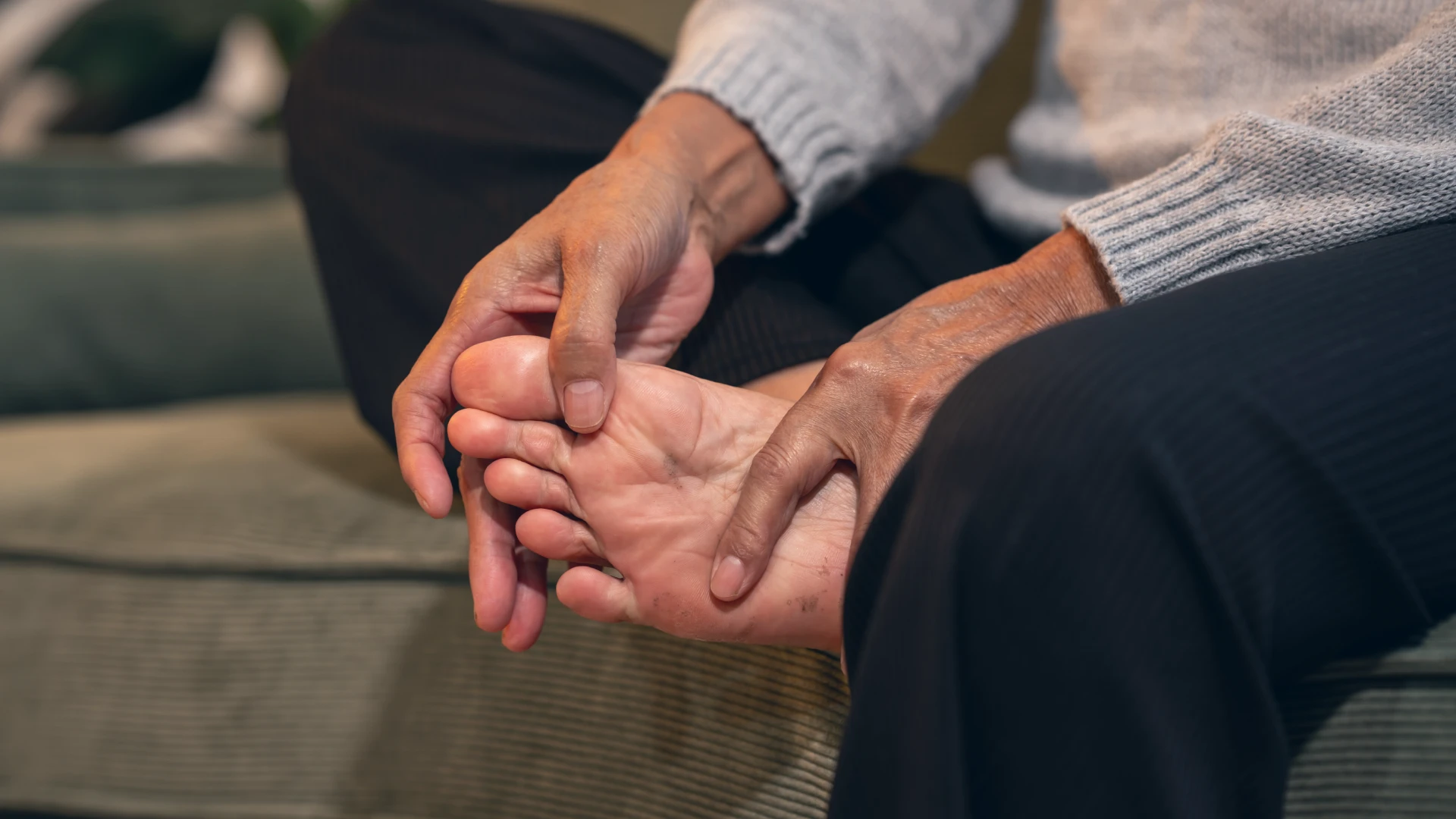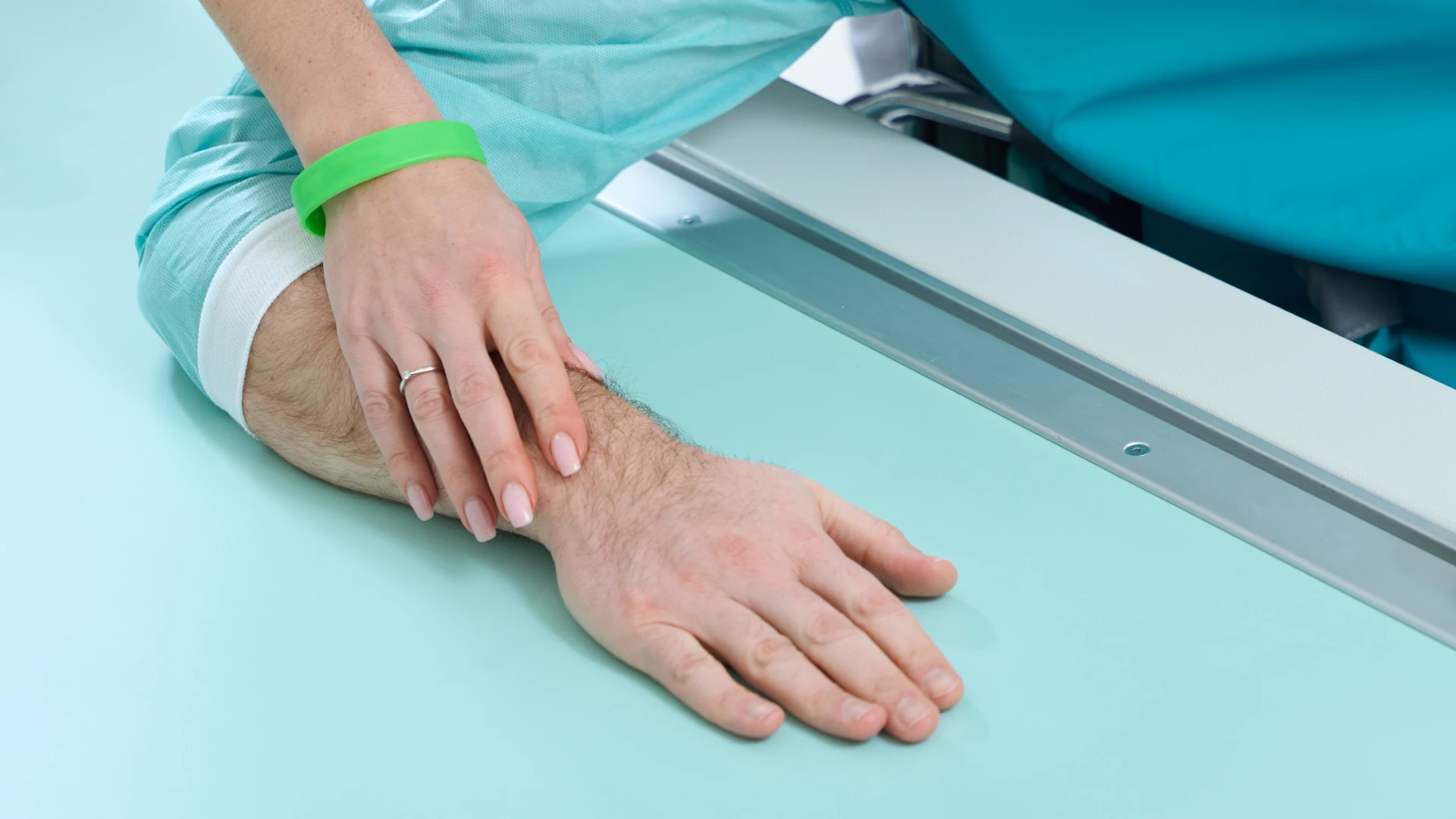
The two treatments you’ll hear about most often are surgery and radiotherapy. If you’re living with Dupuytren’s disease, it’s normal to feel unsure whether you should do something now or whether you should wait and see.
It helps to know that radiotherapy and surgery don’t do the same job. Surgery is for straightening a finger that’s already bent. Radiotherapy is used earlier, to try and slow things down before a fixed bend sets in. This guide explains how surgery and radiotherapy for Dupuytren’s compare, in plain English, so you know what to ask at your appointment. It’s general information though, not personal medical advice.
Key Takeaways
- Radiotherapy is for early, active Dupuytren's and stops the condition worsening or forming a contracture, and aims to prevent the need for surgery. However, it can't straighten a bend that's already formed.
- Surgery is the usual choice once a bent finger starts getting in the way of daily life.
- Surgery takes longer to recover from and has some risks, and the chance of the bend coming back depends on which operation you have.
- Some people have very early disease and can simply monitor the hand for the time being.
Start with stage and timing, not the treatment
Which option makes sense depends mainly on how far your Dupuytren’s has progressed. Most people are at one of three stages: lumps in the palm but no bend, a slight bend or a bend that’s now getting in the way.
Dupuytren’s varies a lot from person to person, and many people never need treatment at all. NHS England’s decision aid gives a good perspective. Of every 100 people who had no treatment for seven years, 78 stayed the same or got better, and 22 got worse. If Dupuytren’s runs in your family or affects both hands, it’s more likely to progress, so your specialist may want to keep a closer eye on it.
Waiting and keeping an eye on things is a perfectly reasonable choice. Checking your hand regularly and taking photos or measurements can show if anything’s changing. If it isn’t, you’ve avoided treatment you might never have needed anyway.
As a rough guide, the decision aid suggests radiotherapy for bends of less than 30 degrees, and surgery is usually considered after that. The Royal College of Radiologists is stricter, recommending radiotherapy only up to ten degrees. That’s why specialists look at how quickly your finger is changing, as well as the angle.
How radiotherapy works and who it suits
Radiotherapy uses low doses of X-rays to slow down the cells that form the lumps and cords in Dupuytren’s. The doses are much lower than those used to treat cancer. It works best while the condition is active and before a fixed bend has formed, although it may still be an option if your finger has only just started to bend.
Treatment is given in two blocks of five sessions, Monday to Friday, about three months apart. Each session takes about ten minutes per hand, and the whole appointment takes about 20 minutes. Some people notice a difference within a few months, but it can take up to a year to see the full benefit.
At Ergea Clinics in Alderley Edge, your first appointment is with a consultant radiotherapy specialist They’ll measure how well your finger moves and take photos so any changes can be tracked over time. You can read more about radiotherapy for Dupuytren’s or what to expect at your first appointment.
Dupuytren’s can affect the feet too. Around one in five people who have it in their hands also get similar lumps in the arch of the foot, which is known as Ledderhose disease. Radiotherapy can be used for this as well, so please mention any problems with your feet at your appointment.
What the evidence does and doesn't say
NICE has looked at the evidence on radiotherapy for early Dupuytren’s. It found the research so far isn’t strong enough to show how well it works, but it didn’t find any major safety concerns. NICE says clinics should only offer it with safeguards in place. That means having the service properly overseen, making sure patients give informed consent and recording how each patient gets on afterwards. The full NICE guidance explains this in more detail.
It’s worth knowing how the longer-term studies were done, because this doesn’t get explained very often. Most compared people who had radiotherapy with people who chose not to, rather than putting people in groups at random. Studies like this can make a treatment look better or worse than it really is, so the results are encouraging but can’t give a definite answer.
This is also why there aren’t any fair, like-for-like figures for how often Dupuytren’s comes back after radiotherapy. Bigger trials are needed. One of these, the international DEPART trial, is comparing radiotherapy with simply monitoring the hand in people with early Dupuytren’s. Its results on how well radiotherapy works aren’t published yet.
Radiotherapy side effects and safety
In the weeks after each treatment, your palm may go red, sore or dry, a bit like a mild sunburn. A plain, unperfumed moisturiser is usually all you need, and it tends to settle down within a couple of weeks. In the decision aid, this happens to between 20 and 43 people in every 100.
Some people find their skin stays dry for longer. Studies vary a lot on how common this is, from 5 to 64 people in every 100. The decision aid puts the theoretical risk of the radiation causing skin cancer in the treated area at around 1 in 5,000.
What surgery involves
Surgery is the usual way to straighten a finger once the bend is set. The NHS describes three main operations, and the figures below come from the NHS England decision aid.
Needle fasciotomy
Under local anaesthetic, the doctor uses a needle to make small cuts in the cord through the skin. Most people go home the same day and recover within two weeks. In 85 out of every 100 people, the bend comes back within five years, and 34 in 100 people need another procedure within ten years.
Fasciectomy and dermofasciectomy
In a fasciectomy, the surgeon makes a cut along the palm and finger and removes the affected tissue to straighten it. Recovery takes 4 to 12 weeks, and the bend comes back within five years in 21 in every 100 people. A dermofasciectomy also removes some skin during the operation and replaces it with a skin graft. It takes 6 to 12 weeks to recover from, and over five years, the bend comes back in 8 out of every 100 people.
The Dupuytren’s Society, a UK patient charity, gives a similar figure of about 8% for dermofasciectomy. It also points out that, in general, the bigger the operation, the longer the recovery and the higher the risk of complications.
Recovery and risks
Hand therapy is an important part of recovery after surgery and some people need to wear a splint for a while. It’s worth asking when you’ll be able to drive and go back to work, as this depends on the operation and the nature of your job.
Long-term nerve damage affects between 2 and 6 people in every 100, depending on the operation. Complex regional pain syndrome, which causes lasting pain and stiffness, affects 1 in 100 after needle fasciotomy and 4 to 10 in 100 after open surgery. Wound problems can happen too. Your surgeon should explain how likely each of these is for you.
Surgery and radiotherapy side by side
Radiotherapy | Surgery | |
Best suited to | Early, active disease with little or no bend | An established bend that’s getting in the way of using your hand |
What it does | Aims to slow things down, prevent a contracture, avoid surgery | Straightens the finger |
Procedure | Two blocks of five short sessions | A needle procedure or an open operation |
Recovery | No downtime, though the skin may be mildly sore | Under 2 weeks (needle) to 12 weeks (operation) |
Main risks | Dry or sore skin, a tiny risk of skin cancer | Nerve damage, regional pain syndrome, wound problems |
Return within 5 years | No comparable figures | 8 to 85 in 100, depending on the operation |
Access in the UK | Private (self-pay or through insurance) | On the NHS through your GP, or privately |
Can you have both?
Researchers are also looking at whether radiotherapy given soon after a procedure could stop Dupuytren’s coming back. The DEPART trial is testing this too, comparing radiotherapy with no extra treatment after a limited fasciectomy or needle fasciotomy. So far, it has only published results on the side effects, which were mostly mild. It hasn’t yet reported on whether Dupuytren’s comes back less often. A hand surgeon and a radiotherapy specialist can talk you through your options, and the order that might work best for you.
Getting treatment in the UK
Surgery
Hand surgery is widely available on the NHS. See your General Practitioner (GP) if a finger is bent and you can’t put your hand down flat, or if daily tasks have become difficult. They can refer you to a specialist. You can also choose to have surgery privately.
Radiotherapy
Radiotherapy for Dupuytren’s disease isn’t routinely available on the NHS. It is available privately, either by paying for treatment yourself or through private health insurance. Some insurers cover this treatment, while others do not, so it’s important to check with your insurer before proceeding.
Questions to ask at your consultation
Before your appointment, it’s worth thinking about what stage you’re at, how quickly things are changing, any treatment you’ve had before, which hand you use most and what you do for work. A musician or manual worker may think about recovery time quite differently from someone who sits at a keyboard all day. If your Dupuytren’s has come back after surgery, it’s a good idea to get a specialist opinion. You might want to ask:
- Are the nodules and cords changing or staying the same
- How far has my finger bent and is it affecting my function?
- What are the risks and recovery time for me?
- What’s likely to happen if I wait?
- Do you offer both treatments, or refer people on, and what follow-up will I have?
Frequently asked questions
Is radiotherapy better than surgery for Dupuytren's?
Neither is better overall, because they’re used at different stages. Radiotherapy is for early, active Dupuytren’s and surgery is to release an already bent finger. Your consultant can tell you which treatment is likely to suit you, based on your hand, your symptoms and how quickly things are changing. They can also talk you through the pros and cons of each option.
Will the NHS pay for Dupuytren's radiotherapy?
Radiotherapy for Dupuytren’s isn’t routinely funded by the NHS. Hand surgery, by contrast, is widely available on the NHS if your GP refers you. Some private insurers will cover radiotherapy for Dupuytrens and others do not ask us if you’re not sure.
How long does recovery take after Dupuytren's surgery?
It depends on which operation you have. Recovery up to two weeks (often less) after a needle fasciotomy, 4 to 12 weeks after a fasciectomy and 6 to 12 weeks after a dermofasciectomy. Hand therapy should be part of recovery, and many people need a splint. Ask your surgeon specifically about driving and returning to work.
Can Dupuytren's come back after surgery?
Yes, it can. The NHS says the bend can come back after a few years, and there’s no known way to prevent this. How likely it is depends on the operation. Within five years, it returns in 85 in 100 people after needle fasciotomy, 21 after fasciectomy and 8 after dermofasciectomy. Regular check-ups mean any change can be picked up early.
Is radiotherapy for Dupuytren's safe?
NICE found no major safety concerns with radiotherapy for early Dupuytren’s, but like any treatment, it isn’t completely risk-free. It’s common for the palm to go red, sore or dry, but this usually settles within a couple of weeks. Your background risk of skin cancer from the sunlight is around 10%, and radiotherapy give an additional risk of around 0.1% in the treated area. Your consultant will go through all of this with you before you decide.