Key Takeaways
- Early stage: a lump you can feel, but a hand that still lies flat on a table. That's the dividing line that matters.
- Advanced stage: a finger that can't be straightened, even with the other hand helping.
- Many people only ever have a lump and never develop a bent finger.
- Pain: it may be tender to start, but severe or worsening pain is less typical and worth getting checked.
- Outlook: bends at the knuckle joint are usually easier to correct than bends at the middle joint of the finger.
Symptoms that arrive in order
Most descriptions of Dupuytren’s contracture give you a list: lumps (nodules), pits, cords, bent fingers. That’s accurate, but it doesn’t help much if you’ve just found a lump in your palm. It doesn’t tell you where you are now. The symptoms don’t usually appear together. They arrive in a fairly predictable order, usually over years, and the gap between the first sign and a bent finger can be long. Many people will never get that far.
This article explains the early signs and the advanced ones, and helps you estimate where your own hand is. For treatment, start with our page on Dupuytren’s contracture.
What are the symptoms of Dupuytren's contracture?
Dupuytren’s affects the palmar fascia, a layer of connective tissue between the skin of the palm and the tendons underneath. As this layer thickens and tightens, it can cause firm lumps under the skin, dimples in the skin above them, a thick band running from the palm into a finger and finally a finger pulled towards the palm that can’t be straightened.
Dupuytren’s affects a layer of tissue, not the nerves, so if your main symptom is pins and needles, it’s worth getting checked for something else.
The most useful way to divide the symptoms is by whether the hand still lies flat. Everything before a finger stops straightening is early disease, and everything after is advanced.
Early-stage symptoms
Early Dupuytren’s means changes you can see and feel in the palm, while your fingers still move normally.
Small lumps (nodules)
This is usually the first sign. It’s a firm lump, often pea-sized or smaller, most often in line with the ring or little finger. It feels fixed to the tissue underneath instead of moving with the skin, which is how it differs from a callus. It can be a little tender at first, but usually settles down.
Pitting or dimpling of the skin
You may see small dents or puckers in the palm, as if the skin is being pulled from underneath. This happens because the thickened tissue is attached to the skin.
Changes in how the palm feels
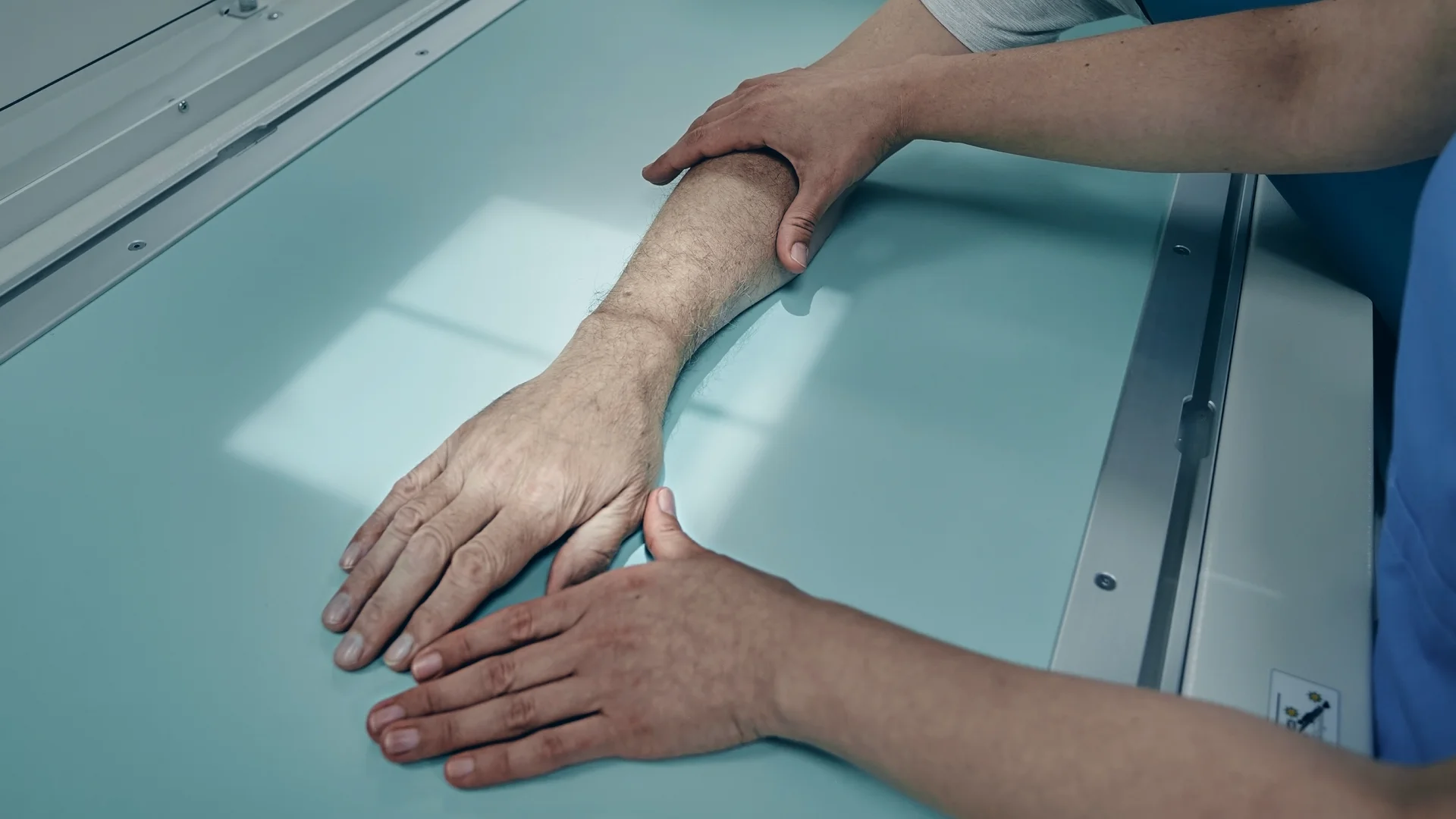
This is often the first thing people notice day to day. You may feel a slight tightness when you spread your fingers. At this stage, the hand still lies flat. If you can place your palm and every finger flat on a table, you’re in the early stage, whatever the lump feels like.
How Dupuytren's progresses
It progresses slowly and unevenly, and some people find it never progresses at all. It usually changes over years rather than weeks, and it can stay the same for long periods. A lump that hasn’t changed in years may stay that way.
When it does get worse, the lump can extend into a cord, a rope-like band of thickened tissue running from the palm into the finger. As the cord tightens, it pulls the finger towards the palm.
Specialists often grade this using the Tubiana system, which measures how far a finger is from straight. It starts with a lump and no bend, and then goes through four stages as the bend increases. Surgery is usually considered when the hand can’t lie flat on a table or when the bend affects how you use your hand. Low-dose radiotherapy can be used to treat early Dupuytren’s contracture. It aims to slow down the progress rather than straighten a finger. Dupuytren’s is a benign (non-cancerous) condition, and low-dose radiotherapy uses much lower doses than radiotherapy for cancer.
Signs that suggest more active disease
- Getting it before the age of 50.
- Both hands affected.
- A strong family history.
- Thickening in the soles of the feet or over the knuckles.
Together, these features are known as Dupuytren’s diathesis. They don’t mean you need treatment sooner, but a specialist may want to keep seeing you for check-ups.
Worried about a lump in your palm?
You might be wondering whether it'll get worse and whether you should do anything now. A consultant can assess your hand, explain what's happening and talk you through your options.
Advanced-stage symptoms
Advanced disease starts when you can no longer straighten a finger, even with the other hand helping.
Cords and fingers bending towards the palm
The cord is easy to see and feel. It stands out as a taut band when you try to straighten the finger. The ring and little fingers tend to be affected first. The bend usually starts at the knuckle joint (the MCP joint) and may involve the middle joint of the finger (the PIP joint) later. This matters because bends at the knuckle are usually easier to correct with surgery, while bends at the middle joint are harder to correct and are more likely to come back.
Difficulty straightening the hand
The hand no longer lies flat. In more severe cases, the finger is pulled further into the palm. Sometimes the thumb, or the web of skin between the thumb and index finger, is affected, which can make gripping harder or stop the thumb fully spreading out.
Impact on daily life
This, rather than how the hand looks, is usually what brings people to a clinic. Everyday tasks can become awkward, such as putting your hand in a pocket, pulling on gloves, washing your face, shaking hands or holding a steering wheel. If your finger is bent tightly into the palm, the skin in the crease can be hard to wash and dry, which can lead to soreness.
Early vs advanced symptoms compared
Early stage | Advanced stage | |
|---|---|---|
What you feel | A firm lump under the skin of the palm | A tight cord from the palm into the finger |
Skin changes | Dimpling, pitting, puckering | Dimpling, pitting, puckering |
Finger position | Straightens fully | Can’t be straightened, even with help |
Tabletop test | Hand lies flat | Hand won’t lie flat |
Tubiana stage | Stage N or N/I, lump with no bend | Stage I to IV, depending on the bend |
Usual approach | Monitoring, or treatment aimed at slowing progression | Referral, and surgery if your hand function is affected |
The tabletop test is the one to remember. It’s the same check your GP or hand surgeon will use.
Which fingers are most commonly affected?
The ring finger is affected most often, followed by the little finger.The thumb and the web between the thumb and index finger are affected less often, but this can cause more trouble, because so much of your grip depends on your thumb. Many people eventually have changes in both hands, so if you’ve found something in one palm, check the other.
Is Dupuytren's contracture painful?
Usually not, which often surprises people. Even a hand with a badly bent finger doesn’t usually hurt. A new lump can be tender for a while, but this tends to settle within a couple of months. Because Dupuytren’s is usually painless, ongoing pain can sometimes be a sign that something else is going on.
Symptoms that point away from Dupuytren's
Dupuytren’s is usually slow and painless. If your symptoms are different, it’s worth getting them checked instead of waiting to see what happens.
- Severe or worsening pain, or pain that wakes you at night.
- Numbness, tingling or weakness.
- A lump that grows quickly, over weeks rather than years.
- Redness, heat or swelling.
- A finger that catches or clicks and then releases, which is more typical of trigger finger.
None of these means something serious is happening, and many have straightforward explanations. But it’s worth confirming what’s causing them, so see your GP.
When should you see a specialist?
A lump on its own doesn’t usually need urgent attention. What matters is how well your hand works, and there’s a simple way to check.
The tabletop test
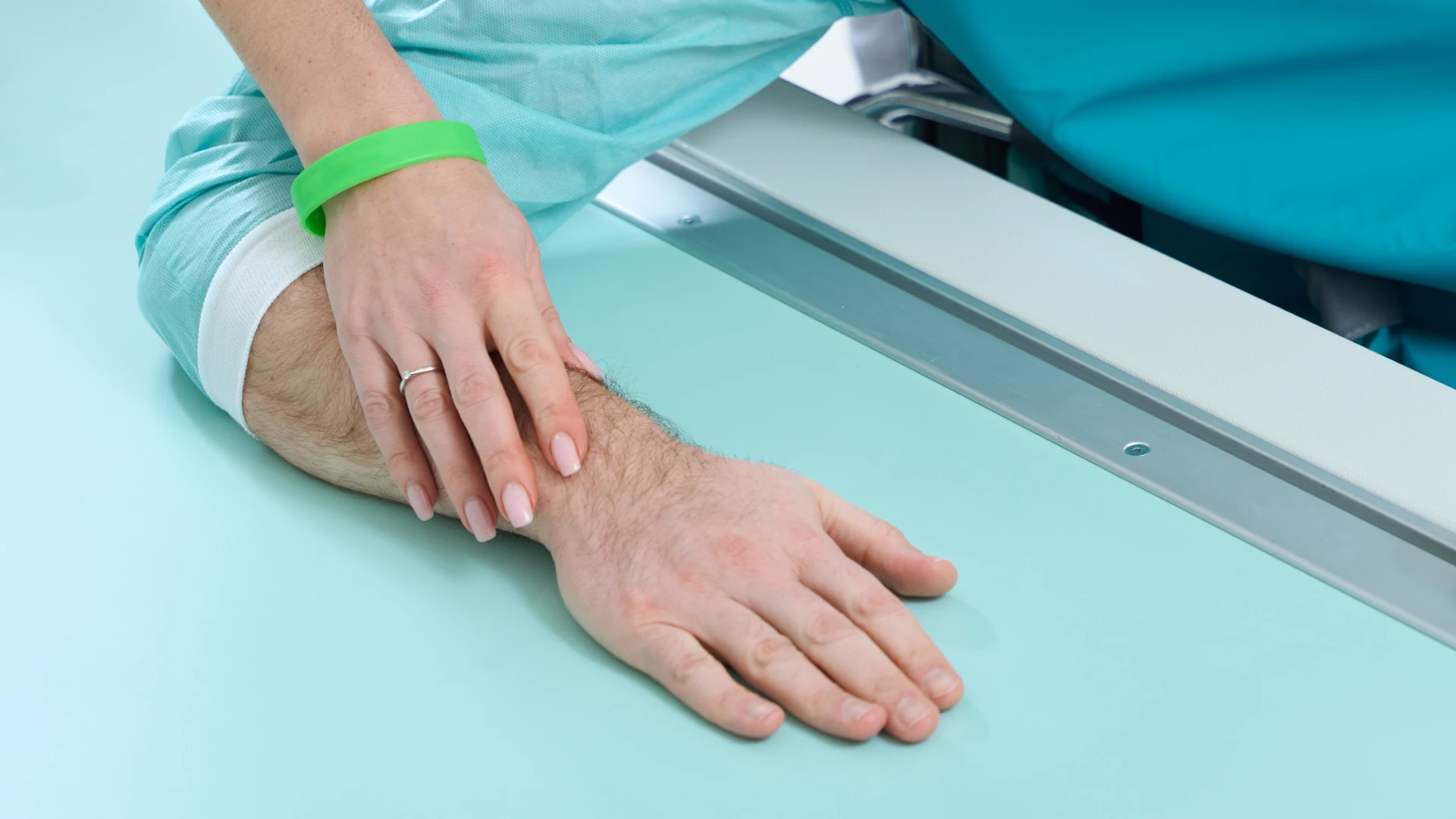
Place your palm flat on a table and try to lay your whole hand down.
If your palm and every finger rest on the table, the test is negative.
If part of the palm or finger doesn’t reach the table, the test is positive. This is usually when a referral to a hand surgeon is considered.
See your GP if the test is positive, if a finger is getting in the way of daily tasks, or if a lump is painful or growing quickly. On the NHS, lumps without a bent finger are usually monitored rather than treated.
It’s more useful to keep track of whether your hand still lies flat than to watch the size of the lump. Taking a photo of your hand flat on a table every few months can help. It gives a specialist a clear record of whether anything has changed.
Speak to one of our specialists about Dupuytren's contracture
Based at Alderley Edge in Cheshire, Ergéa Clinics is a self-pay clinic specialising in low-dose radiotherapy for Dupuytren's disease and other benign (non-cancerous) conditions. At your first appointment, a consultant will look at your hand, explain what they find and talk through whether low-dose radiotherapy might be right for you.
Frequently asked questions
What are the first signs of Dupuytren's contracture?
A firm lump under the skin of the palm, often pea-sized or smaller and most often in line with the ring or little finger. Small dimples or puckers in the skin above it are common, and part of the palm may feel thicker or tighter. At this stage, the fingers still straighten fully, and the hand still lies flat on a table.
How do I know if I have early or advanced Dupuytren's?
Place your palm flat on a table and try to lay your whole hand down. If your palm and every finger rest on the table, you’re in the early stage, whatever the lump feels like. If part of the palm or finger won’t reach the table, the condition is advanced. This simple check is one doctors use too.
Does a Dupuytren's nodule always turn into a bent finger?
No. Many people have a lump for years that never develops into a cord or a bent finger. There’s no reliable way to predict who will progress, although getting it before 50, having it in both hands, a strong family history and lumps in the feet or knuckles can suggest that the disease is more likely to progress.
How quickly does Dupuytren's contracture progress?
Usually slowly and unevenly. It tends to change over years, and long periods with no change are common. The gap between a first nodule and a finger that will not straighten is often years, though some people progress faster.
Is a lump in my palm always Dupuytren's contracture?
No. A callus is in the skin itself and moves with it. A ganglion cyst is usually softer and rounder. Trigger finger catches or clicks as the finger bends, then releases, whereas a finger with Dupuytren’s simply stops straightening. A Dupuytren’s lump feels firm and fixed to the tissue underneath, and often puckers the skin above it. If you’re not sure, see your GP.
Which fingers does Dupuytren's contracture affect?
The ring finger is most often affected, followed by the little finger. Other fingers and the thumb are affected less often. When the thumb is affected, it can cause trouble with grip or thumb extension. Many people eventually have changes in both hands.
Should I be worried if my Dupuytren's is painful?
Dupuytren’s is usually painless, so if pain is the main issue then it’s worth taking seriously. A new lump can be tender for a couple of months, and that’s normal. Severe pain, pain that’s getting worse or waking you at night, or pain with numbness or tingling may point to something else, so get it checked.
What happens if Dupuytren's contracture is left untreated?
For some people the lumps and cords may remain stable for many years. If a bend does get worse, the finger can be pulled further into the palm, and gripping and daily tasks can become harder. Bends that have been there for a very long time can also be harder to correct fully.