Key takeaways
- Family history: siblings of an affected person are around four to five times more likely to develop Dupuytren's contracture.
- Age, sex and ancestry: uncommon before 40, more common in men and markedly more common in people of Northern European descent.
- Health conditions: diabetes is the most consistently reported association. The link with epilepsy is less clear.
- Lifestyle: smoking and alcohol use carry a modest but real risk. Typing and office work haven't been shown to cause it.
- Work: manual work raises the risk in proportion to how much you do, and long-term use of vibrating hand tools can more than double it. Dupuytren's became a prescribed industrial disease in Great Britain in 2019.
Did I cause this?
Most people looking up the cause of Dupuytren’s contracture are actually trying to find out one thing: “What did I do to bring this on?” You almost certainly did nothing to cause it. This is one of the most strongly inherited conditions in hand surgery, and the lifestyle factors listed alongside it are mostly modest by comparison.
This article separates what’s genetic from what’s environmental and explains how strong the evidence is for each. If you want the treatment side first, start with low-dose radiotherapy for Dupuytren’s contracture, which is what we provide at Ergéa Clinics. Dupuytren’s is a benign (non-cancerous) condition, and low-dose radiotherapy uses much lower doses than radiotherapy for cancer.
What happens in the hand?
Dupuytren’s affects the palmar fascia, a layer of tissue just under the skin of your palm. Cells in this layer start making too much collagen, a tough protein, and pulling on it. Over time, this forms lumps (nodules) and then cords, which can slowly pull a finger into a bent position.
Experts don’t yet know exactly what switches these cells on. Genes clearly play a big part, as the next section explains.
How much of it is genetic?
A Danish study of over 30,000 twin pairs estimated the overall heritability of Dupuytren’s disease at around 80%. This means genes explain most of the difference between people who develop Dupuytren’s and people who don’t. Your lifestyle plays a much smaller part.
UK data points the same way: siblings of someone with the condition are around four to five times more likely to develop it. If you have a parent, brother or sister with Dupuytren’s, that tells you more about your risk than your diet or your drinking.
Does that mean it is inherited?
Not in the simple way people mean. Dupuytren’s isn’t passed down through a single gene, where each child has a 50/50 chance of getting it. Instead, many different genes nudge the risk up a little, along with age and other factors. Researchers have found dozens of gene variants linked to Dupuytren’s, but they don’t yet explain all of the inherited risk.
A strong family history raises your risk, but plenty of people with an affected parent never develop it. No known family history doesn’t rule it out either, since it doesn’t come out in every generation and older relatives may have put a bent finger down to age. There’s no reliable genetic test for Dupuytren’s. Even if there were, it couldn’t tell you whether you’ll develop it, when or how severely.
Ancestry, age and sex
Dupuytren’s is more common in people of Northern European descent and less common in South Asian, East Asian and African populations. This is why it’s sometimes called ‘Viking disease’, although genetic studies don’t support a Viking link. Research suggests some of the strongest genetic risk factors were inherited from Neanderthals. Around 2 million people in the UK are thought to have it.
Age is another big factor. Dupuytren’s is uncommon before age 40 and becomes steadily more common through people’s fifties, sixties and seventies. Men are affected more often, and usually earlier and more severely. Women tend to show signs of it later in life and more mildly, but in older women it may be underdiagnosed rather than rare.
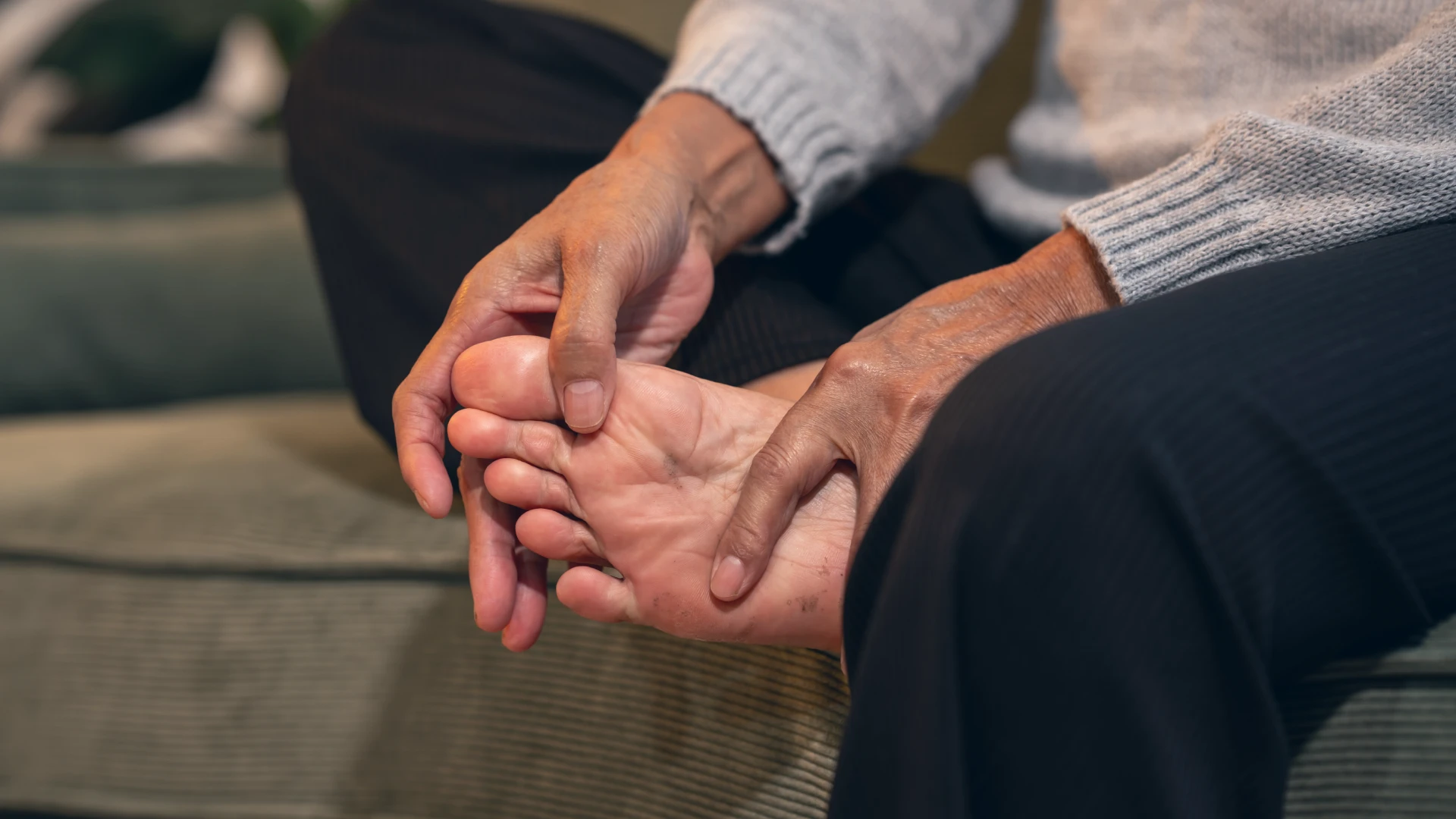
Signs that it’s more likely to be genetic include symptoms before 50, both hands affected, a strong family history, thickened pads over the knuckles and Ledderhose disease, a similar condition that causes lumps on the soles of the feet. Doctors call this a Dupuytren’s diathesis. It’s linked to faster-progressing disease and a higher chance of it coming back after treatment. This is why a specialist may want to keep seeing you for check-ups.
Worried about a lump in your palm?
You might be wondering whether it'll get worse and whether it's worth doing anything now. A consultant can assess your hand, explain what's happening and talk you through your options.
The health conditions linked to Dupuytren's
Some of these are better supported than others, so we’ve listed them starting with the strongest evidence.
Diabetes
Diabetes is the health condition most often linked to Dupuytren’s. The link is seen in both type 1 and type 2 diabetes, and the risk seems to rise the longer someone has had it. In people with diabetes, Dupuytren’s tends to be milder, often affects the middle and ring fingers, and is less likely to need surgery. Genetic studies suggest the two conditions may share some of the same genetic causes, so they can occur together without diabetes directly causing Dupuytren’s.
Epilepsy and epilepsy medicines
Epilepsy appears on most lists of risk factors, including the NHS one. Much of the evidence comes from older studies of people taking older epilepsy medicines, such as phenobarbital, and the link is less clear today. If you have epilepsy, don’t change or stop your medicine because of this.
Smoking and alcohol
Smoking and drinking alcohol are both linked to Dupuytren’s, but the effect is modest compared with family history. They’re hard to separate because they often go together. The more someone smokes, the higher the risk seems to be, possibly because smoking damages the tiny blood vessels in the palm.
Giving up smoking and cutting down on alcohol are good for your health in many ways, and they may make a difference to your risk of Dupuytren’s getting worse.
Work, vibration and the UK legal position
Manual work is linked to Dupuytren’s, and the more of it you do, the higher the risk seems to be. A large UK Biobank study found that people in manual jobs were more likely to have Dupuytren’s, and that the risk rose with the amount of manual work done over a working life. Typing and office work haven’t been shown to cause it. Vibration carries a particular risk. In 2014, the government’s Industrial Injuries Advisory Council found that using vibrating hand-held tools for long enough can more than double the risk.
Since December 2019, Dupuytren’s contracture has been a prescribed industrial disease in England, Scotland and Wales. This means that if you were employed (not self-employed) and developed it after years of using vibrating tools at work, you may be able to claim Industrial Injuries Disablement Benefit. To qualify, you’ll usually need to have used vibrating hand-held power tools for at least ten years in total, for at least two hours a day on three or more days a week. The finger also needs to be fixed in a bent position, and the rules set specific limits for this.
This mostly affects people who’ve worked for many years in jobs such as mining, quarrying, construction, shipbuilding and engineering. You can find out more and how to claim on the gov.uk Industrial Injuries Disablement Benefit page.
What does not cause Dupuytren's contracture?
There’s a lot of confusion about what causes Dupuytren’s, so here are some things that don’t.
- Typing, texting or office work. There’s no evidence these cause it.
- Arthritis. A different condition that affects the joints.
- A single injury. Some people notice it after an injury, but that hasn’t been shown to cause it.
- Diet. No food, supplement or exercise has been shown to cause or prevent it.
Can you change your risk?
You can’t change your genes, and they play the biggest part, so Dupuytren’s can’t be prevented completely. But there are plenty of things you can change, and it’s worth acting on them.
If you smoke, stopping is the most obvious step. Keep your drinking within recommended limits. If you have diabetes, keep it as well controlled as you can. At work and at home, limit repeated impact, heavy gripping and vibrating tools where you can, and take regular breaks. None of this guarantees you’ll avoid Dupuytren’s, but all of it is good for your health and may reduce your risk.
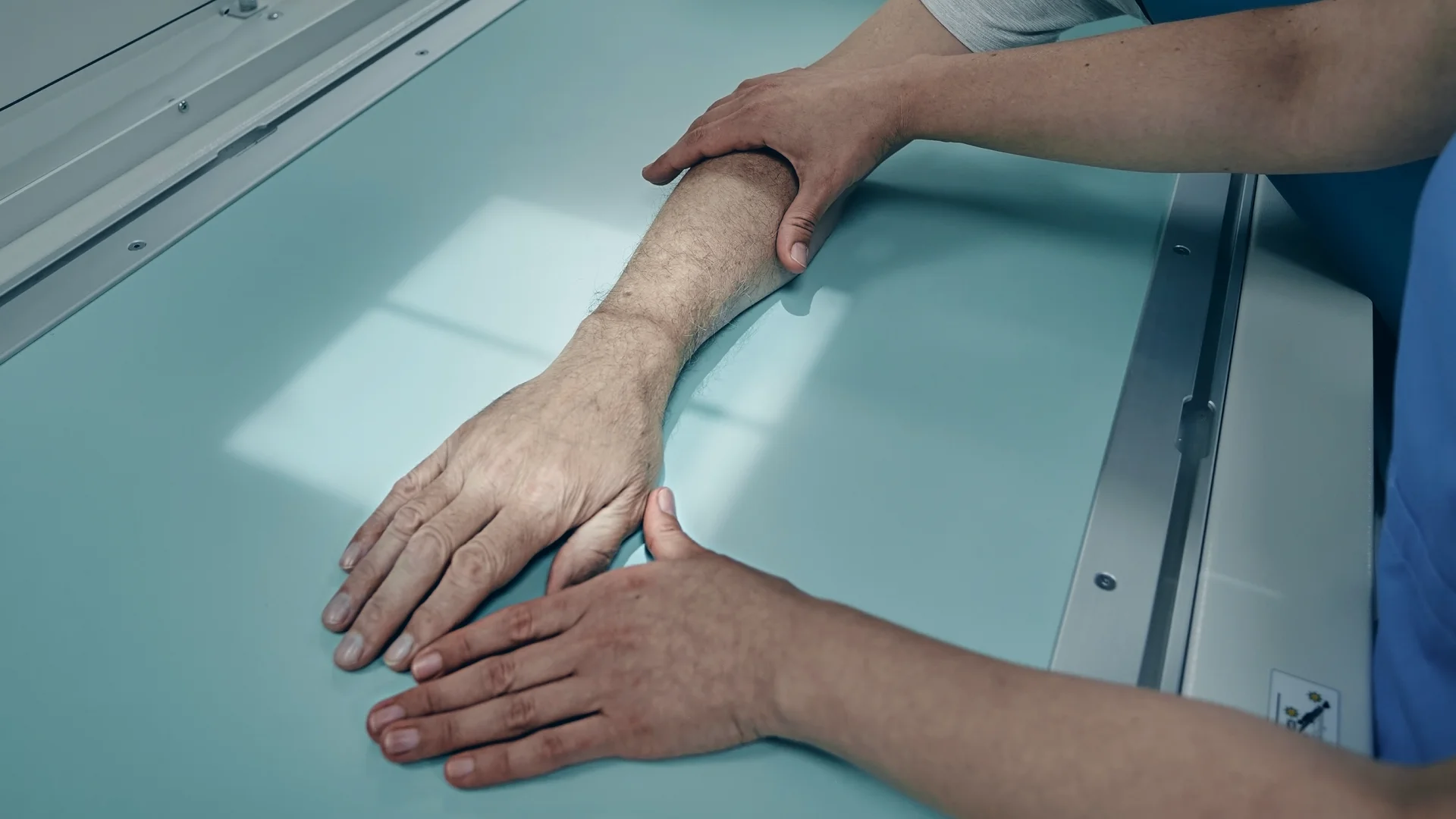
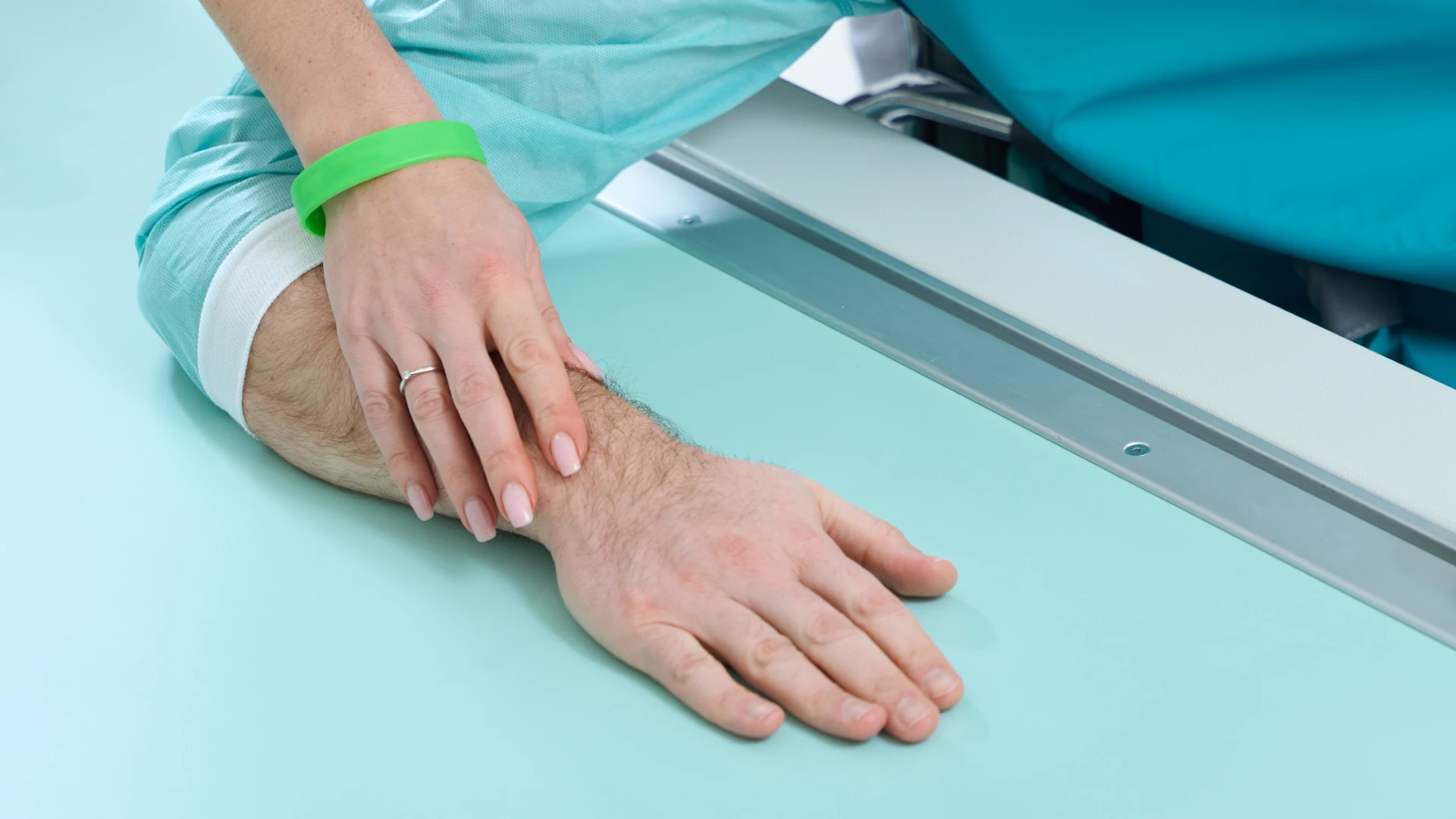
It’s more useful to know what to look out for. If you notice a lump in your palm, check whether your hand still lies flat on a table. If it doesn’t lie flat, you may already have a contracture, so see your GP, who can consider whether you need to see a surgeon. If your hand is flat or almost flat, see a specialist in early Dupuytren’s for an assessment of whether radiotherapy could stop it getting worse.
Speak to one of our specialists about Dupuytren's contracture
Based at Alderley Edge in Cheshire, Ergéa Clinics is a self-pay clinic specialising in low-dose radiotherapy for Dupuytren's disease and other benign conditions. At your first appointment, a consultant will look at your hand, explain what they find and talk through whether low-dose radiotherapy might be right for you.
Frequently asked questions
Is Dupuytren's contracture hereditary?
Largely, yes. A Danish study of more than 30,000 twin pairs found that genes explain about 80% of the difference between people who get Dupuytren’s and people who don’t. Brothers and sisters of someone with it are around four to five times more likely to develop it. It isn’t passed down through a single gene, though, so a family history raises your risk without making it certain.
If one of my parents has Dupuytren's contracture, will I get it?
Not necessarily. A parent with Dupuytren’s raises your risk, but plenty of people with an affected parent never develop it. Getting it before 50, having it in both hands and having Ledderhose disease or thickened knuckle pads can point to a stronger inherited tendency in a family. No test can predict it, so it’s worth knowing the early signs.
Can manual work or using tools cause Dupuytren's contracture?
Yes, it can raise the risk. A large UK study found that people in manual jobs were more likely to have Dupuytren’s, and the more manual work someone had done over their working life, the higher the risk. Vibration carries a particular risk. In 2014, the government’s Industrial Injuries Advisory Council found that using vibrating hand-held tools for long enough can more than double the risk. Dupuytren’s contracture became a prescribed industrial disease in December 2019.
Can I claim compensation or benefits for Dupuytren's contracture from my job?
You may be able to claim Industrial Injuries Disablement Benefit if you were employed (not self-employed) and your finger is fixed in a bent position. You’ll usually need to have used vibrating hand-held power tools for at least ten years in total, for at least two hours a day on three or more days a week. You can find out more on gov.uk. Whether you could make a separate legal claim is a question for a solicitor.
Does diabetes cause Dupuytren's contracture?
Diabetes is the health condition most often linked to Dupuytren’s, and the risk seems to rise the longer someone has had it. It may not be a direct cause, though, as the two conditions may share some of the same genetic causes. That means the two can occur together without one causing the other. In people with diabetes, Dupuytren’s tends to be milder and less likely to need surgery.
Does drinking alcohol cause Dupuytren's contracture?
Drinking alcohol is associated with Dupuytren’s, and it isn’t only heavy drinking, but the link is much weaker than family history.
Why is Dupuytren's contracture called Viking disease?
Because it’s more common in people of Northern European descent. The name is a bit of a misnomer, though. Genetic studies haven’t found a Viking link, and some of the strongest genetic risk factors for Dupuytren’s were inherited from Neanderthals.
Can Dupuytren's contracture be prevented?
Not completely. Genes play the biggest part, and you can’t change them, so it can’t be prevented altogether. But you can reduce the chance of it developing by controlling the risk factors you can change, such as smoking, alcohol, diabetes control and repeated hand impact or vibration. And if it does start, you may be able to stop it from becoming a disabling contracture with low-dose radiotherapy.